

The emergence of new technologies has radically changed the way companies relate to their audiences, betting heavily on digital communication in which immediacy, personalisation and technology are almost as important as the message itself.
In this context, it is necessary to move beyond the idea of communication as simply a channel for transmitting information. It is no longer just about posting more or less appealing messages, but about creating user experiences, providing value and building strong lasting relationships with customers. This is the context in which the Master’s Degree in Digital Communication and New Technologies becomes especially relevant, offering professionals the tools to understand and lead this new way of communicating.
The emergence of technologies such as artificial intelligence (AI), along with the constant evolution of digital platforms, has raised the level of demand in the market. And recent studies, such as the one by McKinsey, indicate that nearly 75% of companies are already actively investing in AI to improve their processes and speed up decision-making.
If customer journeys, internet searches and even the voice of companies are already being invaded by AI, how can marketing and branding professionals adapt to the revolution that new digital communication represents?
Key trends and skills in digital communication
The rules of the game have been transformed at the same pace as user expectations have evolved. Today, responding quickly, maintaining an active presence on social media and adapting messages in real time are no longer considered distinguishing factors, but basic requirements that any organisation must meet: it is exactly what users expect from us.
One of the trends that defines the new digital communication is the hyper-personalisation of content. It must be relevant and adapted to the user’s needs and behaviours, but must also facilitate data collection. Traceability and analysis of these needs and behaviours, thanks to the use of specialised tools, is what will allow companies to segment accurately and create these messages almost tailor-made.
Another trend that is gaining increasing prominence is the format of the content itself, which is becoming increasingly audiovisual and shorter. Platforms like TikTok, Instagram Reels and YouTube Shorts have changed the way we consume information, with a clear commitment to fast-paced, creative, interactive messages.
Omnichannel is no longer optional. Digital communication demands that organisations have a presence on multiple platforms—from social media to websites, apps and opinion forums—where they must make sure they maintain a consistent, integrated brand identity.
The emergence of artificial intelligence
However, it is AI that is driving the great transformation of digital communication. Some estimates suggest that up to 85% of tasks could be automated or assisted by AI in the future, which, rather than representing a threat, opens up new opportunities for industry professionals. Today it is already possible to create texts, images and videos with AI tools, automate customer service through chatbots, and anticipate trends thanks to predictive analytics. Therefore, understanding and mastering these technologies is a fundamental skill to avoid falling behind in the race for digitalisation.
Even so, the real value lies not only in handling these tools, but in knowing how to apply them with strategic judgment: interpreting data, designing effective messages and providing a creative perspective are aspects that, for the moment, continue to maintain a clearly human essence.
Which platforms are changing the rules of the game?
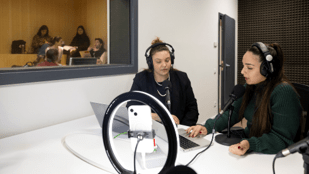
We continue to live in a true golden age of social media, with a constant increase in new formats and platforms that are shaping an increasingly complex communication ecosystem in which each channel has its own rules and communication styles. Podcasts, streaming platforms and videoblogs continue to grow, while content creators are emerging with increasingly valued social influence that is sought after by major brands.
Therefore, communication professionals must not only be able to connect the brand with the user, but must also identify the channels and voices through which to make that connection. Communication is thus evolving towards more horizontal, close and human models in which recommendations and the credibility of third parties are increasingly valued.
The need for specialist training
Are we, then, facing a talent gap? Companies are looking for hybrid profiles that combine, on the one hand, knowledge in communication and marketing with other skills more related to technology and data analysis. However, achieving that level of training usually requires specific, up-to-date and practice-oriented training.
The CEU Abat Oliba University’s Master’s in Digital Communication and New Technologies responds precisely to this need, as it includes training modules in digital tools, new production strategies, web analytics and transmedia narratives.
The World Economic Forum ranks digital and technological skills among the most in-demand skills for 2030
In addition to presenting a comprehensive vision that unites creativity, analysis and technology, the master’s programme provides practical experiences that allow students to work with real tools and understand the digital environment from a more strategic perspective: sector meetings, visits to leading companies in Barcelona and tech-focused training experiences.
High-demand career opportunities
Undertaking highly specialised training in digital communication will undoubtedly open up countless job opportunities for you, whatever your sector of activity:
- Digital marketing manager
- Social media manager
- Digital content creator
- Expert in AI applied to marketing
- Data analyst in digital environments
- Consultant in digital transformation processes
- Corporate communications manager in digital environments
All these profiles share two characteristics: they are key positions in the strategy of current organisations and also have excellent working conditions.
Digital communication continues to evolve, and both AI and new platforms will continue to set its pace. Therefore, training in this field today is a safe bet for your professional development: why not do it at our university? Request information without obligation and lead this transformation on our Barcelona campus!