

Martín F. Echavarría holds a degree in Psychology and Philosophy (Universidad Católica Argentina, Buenos Aires, 1997 and 1999). He earned his PhD in Philosophy from the Pontifical Athenaeum Regina Apostolorum (Rome, 2004). He is a Professor of General Psychology at Universitat Abat Oliba CEU and Dean of the Faculty of Communication, Education, and Humanities at the same university. He is an ordinary member of the Pontifical Academy of St. Thomas Aquinas (Rome). He has written dozens of articles and book chapters on the philosophical foundations of psychology in the light of St. Thomas Aquinas, and several books such as The Praxis of Psychology and Its Epistemological Levels According to St. Thomas Aquinas; From Aristotle to Freud; Currents of Contemporary Psychology; The Formation of Character through Virtues; Christian Anthropology and Mental Health Sciences; Virtue, Psychology, and Mental Health. Several of these books have been translated into Italian and Portuguese.

Mercedes Palet Fritschi. Born in Terrassa, Barcelona in 1958, she studied Philosophy and Educational Sciences, Psychology Section, at the University of Barcelona. She obtained her degree in 1981. Under the supervision of Dr. José María Alsina Roca, she presented her doctoral thesis at the same university in 2000. Since 1988, she has been residing in Switzerland, where she completed her training as a psychotherapist at the Viktor Frankl School (2009). She was a visiting professor at Universitat Abat Oliba Barcelona (2003-2012) and participates as a guest lecturer in university courses, in the training of psychologists and psychotherapists, as well as in psychology conferences. She is dedicated to school and family psychology and the practice of psychotherapy. Mercedes Palet bases her work on the teachings of St. Thomas Aquinas, in which she finds the theoretical and practical principles that guide her teaching and professional activities.

Dr. Helena Orellana is a licensed clinical psychologist in Virginia, Assistant Professor and Director of Clinical Training in Divine Mercy University’s Doctorate in Psychology program. She received her doctoral degree in clinical psychology from the Institute for the Psychological Sciences in 2017. Professional interests include the psychological and spiritual impact of trauma, psychodynamic and interpersonal theories, the supervision and training of graduate students, and the integration of a Catholic vision of the person with psychology, particularly through case formulation.
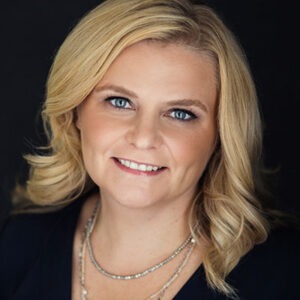
Dr. Suzanne N. Hollman is the Director of the Counseling Center and a Clinical Psychologist at the Catholic University of America. She is also Dean Emerita of the Clinical Psychology doctoral program at Divine Mercy University, where she additionally served as Vice President for Academic Affairs for international collaborations.
Dr. Suzanne Nortier Hollman, Psy.D., Ph.D., holds a doctorate in Clinical Psychology from The George Washington University and a doctorate in the History of Medicine from University College London (UCL). She also holds a master’s degree in the History of Science, Medicine, and Technology from the University of Oxford. She has lived and worked on three continents and has subspecialties in university student mental health and well‑being, neuropsychological assessment, spirituality and mental health, and accreditation of graduate programs in Clinical Psychology.
She is an elected member of the American Psychological Association’s (APA) Commission on Accreditation and has served as Secretary of the National Council for Schools and Programs of Professional Psychology (NCSPP). She works as a consultant on matters related to suitability for religious life, mental health challenges among both lay and clergy populations, and the clinical supervision and training of graduate students in Psychology. She is also a member of the Catholic Women’s Forum of the Ethics and Public Policy Center.

Joseph Currier, PhD is a psychologist and Professor of Psychology at University of South Alabama (USA). His research focuses on addressing the multifaceted role of spirituality/religion in trauma, moral injury, and other mental health challenges in education, training and clinical practice. He has published numerous peer-reviewed articles in support of these lines of work and two books with the American Psychological Association (APA), entitled Trauma, Meaning, and Spirituality: Translating Research into Clinical Practice and Addressing Moral Injury in Clinical Practice. His work has been funded by John Templeton Foundation (JTF), Robert Wood Johnson Foundation (RWJF), Templeton World Charity Foundation, and the Substance Abuse and Mental Health Services Administration (SAMHSA) and Health Resources and Services Administration (HRSA). He also served as Director of Clinical Training for the Clinical and Counseling Psychology Doctoral Program at USA from 2015-2020, Clinical Director for Veterans Recovery Resources from 2018-2022, and was a RWFJ Clinical Scholar Fellow from 2018-2021. He is incoming editor for APA’s Spirituality in Clinical Practice.

Steven J. Sandage, Ph.D., LP, is the Albert and Jessie Danielsen Professor of Psychology of Religion and Theology with appointments in the School of Theology and the Department of Psychological and Brain Sciences at Boston University. He is also Research Director and Senior Staff Psychologist at the Albert & Jessie Danielsen Institute. He is the author of 8 books and over 200 articles with recent volumes published by the American Psychological Association including: Forgiveness and Spirituality in Psychotherapy; Relational Spirituality in Psychotherapy; and Spiritual Diversity in Psychotherapy. His research is currently funded by the John Templeton Foundation, the Peale Foundation, among other foundations. He also practices as a Licensed Psychologist at the Danielsen Institute with clinical specializations that include couple and family therapy, multicultural therapy, and spiritually integrative therapy.

D. Raúl Sacristán López (Madrid, 1976) is a diocesan priest of Madrid, ordained in 2006. He holds a PhD in Theology from the Universidad Eclesiástica San Dámaso, with a thesis on affectivity according to St. Thomas Aquinas. He has a degree in Psychology from the Universidad Complutense. He is a professor of moral theology and psychology at UESD, and also collaborates with the Universidad Francisco de Vitoria. His research focuses on affectivity, particularly in the dual aspects of psychology and theology. Among his publications are: Psychology of Religion (UESD), Moved by Love. Analysis of Affective Dynamism (UESD), Psychology, Person, and Family (Didaskalos), and Education and Affectivity (Didaskalos). He is a member of the Veritas Amoris Project research group.
SPEAKERS

Stefano Parenti is a husband, father of four, and works as a psychotherapist in Milan, Italy. He specializes in masculinity, pornography addiction, and marital support. He is the president of the Catholic Association of Psychology. His latest book is “On the Shoulders of Giants: Psychotherapy from the Perspective of Thomas Aquinas.”

Juan Pablo Rojas Saffie: Doctor and Master in Humanistic and Social Studies from the Universitat Abat Oliba CEU, Barcelona. Clinical Psychologist from the Pontifical Catholic University of Chile. Specialist in Composition and Musical Arrangements from the Modern School of Music. EMDR Therapist. Co-founder of the Catholic Song Foundation, the Human Root Foundation, and the Integral Person Psychology Association. Since 2017, he has been a lecturer at the Universidad Finis Terrae, where he currently serves as the Director of Research at the School of Psychology.
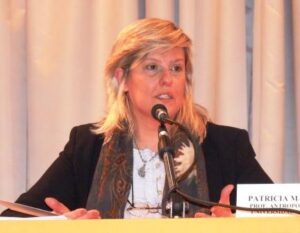
Patricia Martínez Peroni holds dual Argentine-Spanish nationality, is married, and is the mother of five children. She has a degree in Psychopedagogical Sciences from the Pontifical Catholic University of Argentina and in Psychology, with recognition by the MEC at the Universidad Complutense de Madrid. Additionally, she has a Master’s in Humanities from the Universidad Francisco de Vitoria, Madrid. Currently, Patricia is a professor at the Universidad San Pablo CEU in Madrid, where she teaches courses in the Law and Criminology, Psychology, and Nursing programs. Her experience includes participation in international conferences, seminars, and appearances in the Spanish Senate. She has been a professor at various institutions, a university advisor, and the director of a psychopedagogical office.
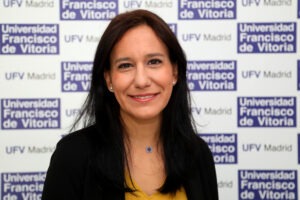
Ruth de Jesús Gómez, doctor in Humanities and Social Sciences from UFV, with the thesis “The Study of Emotions in Richard Lazarus and Magda Arnold. The Need for Anthropology and Metaphysics to Understand Affectivity in Psychology.” She holds a degree in Psychopedagogy from the Pontifical University of Comillas, a diploma in Pedagogy and Teaching, specializing in Special Education, from UCM. She also has a Master’s in Humanities from UFV. She is a professor at UFV in the Master’s in Educational Guidance, the Expert in Affectivity and Sexuality, the Expert in Educational Transformation, the International Program of Guidance, and the Psychology degree, teaching the subjects of Psychology of Affectivity and Emotion and Life Cycle. She is also a professor in the Master’s in Integral Psychology at UFT (Santiago de Chile). With over 15 years of experience in university teaching, she has worked for 14 years as a counselor in secondary education. She combines university teaching with educational counseling for parents and guidance for adolescents and young people in their process of personal and emotional maturation.
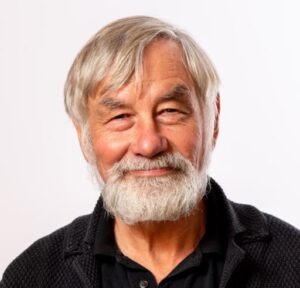
Werner May was the senior chairman of the IGNIS Institute for Christian Psychology in Kitzingen /Germany for more than 25 years (www.ignis.de). As a teacher his main interest was in basic questions of Christian Psychology and in counseling of foster families. He also helped to build up the Institute for Christian Psychology, Education and Therapy in Switzerland (www.icp.ch). Now he is the chairman of the European Movement for Christan Anthropology, Psychology and Therapy (www.emcapp.eu) and publishes the free e-journal Christan Psychology Around The World (https://emcapp.ignis.de/). Werner has been married to Agnes for now 50 years. They live in Würzburg, Germany, and have six adult children.
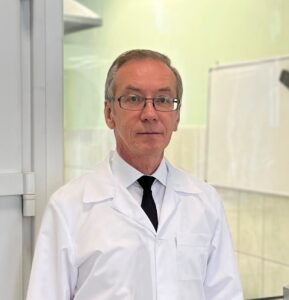
Aleksandr Shevchenko, holder of a degree in Medicine (Voronezh, 1989), PhD in Philosophy from the Institute of Philosophy of the Russian Academy of Sciences (Moscow, 1995), and a degree in Pedagogy from St. Tikhon Orthodox University (Moscow, 2002). His areas of scholarly interest include medical and Christian anthropology, pastoral medicine, Christian bioethics, and the dialogue between medicine and theology in the field of mental health.
He is currently an assistant at the Department of Normal Human Anatomy at Voronezh State Medical University, an associate professor at the Voronezh Theological Seminary, the head of the medical department of the Voronezh Eparchy of the Russian Orthodox Church, and a visiting lecturer at the St. Andrew the Apostle Biblical-Theological Institute (Moscow).
He is a member of the working group on pastoral care for people with mental illnesses of the Inter-Council Presence of the Russian Orthodox Church. He is one of the co-authors of the document “Pastoral Care for People with Mental Illnesses in the Russian Orthodox Church” (2020). He is also a member of the Organizing Committee of the international conferences “The Church’s Care for People with Mental Illness,” held annually in Moscow since 2018 by the Department for External Church Relations of the Moscow Patriarchate.
He is the author of more than 50 articles dedicated to medicine and to the dialogue between medicine and Orthodoxy.
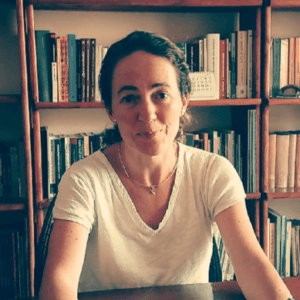
Mar Alvarez-Segura, M.D., Ph.D., is a child and adolescent psychiatrist specialized in trauma treatment. Her clinical experience in the field of trauma includes having been part of the intervention program following the terrorist attack of March 11, 2004, in Madrid, as well as receiving training through the Harvard Program in Refugee Trauma. In addition, she was a Child Psychiatry fellow at Bellevue Hospital in New York, where she received training in group interventions for traumatized children and conducted research on the intergenerational effects of trauma in Latin populations.
She is currently the coordinator of the Child and Adolescent Mental Health Center of Cornellà at Sant Joan de Déu Hospital in Barcelona, where she works as a psychiatrist in a program for witnesses of domestic violence (TEVI). She has coordinated two European projects related to violence in children and adolescents (the SAVE and RESCCUE projects).
Mar Alvarez-Segura is also a lecturer at Abat Oliba CEU University in the field of Personality, where she studies and teaches psychobiographies, with a special interest in transformative personality experiences. Her research areas include anthropology and spirituality in psychiatry. She is passionate about investigating and communicating the anthropological foundations that provide individuals with extraordinary resources for recovery.
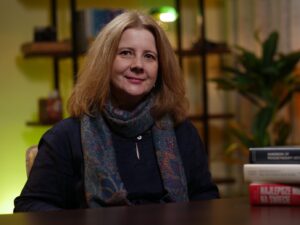
Agnieszka Wojsz – psychotherapist, theologian
She is a graduate of theology at Cardinal Stefan Wyszyński University in Warsaw (2000) and has completed postgraduate studies in history at the University of Gdańsk (2005). She completed a course in integrative psychotherapy at the Association of Christian Psychologists (ACP) (2017) and is currently training at the Polish Institute of Psychodrama. She completed her psychological practice and clinical placement at the Clinic of Psychiatry, Combat Stress and Psychotraumatology at the Warsaw Medical Institute. She is a lecturer at Collegium Verum in Warsaw and at the ACP psychotherapy programme. She is vice-president of the Association of Christian Psychologists (ACP), president of the ‘In a Different Light’ Foundation, and a board member of The European Movement for Christian Anthropology, Psychology and Psychotherapy (EMCAPP).
For 18 years, she was a teacher and form tutor at a comprehensive secondary school. She is a certified psychotherapist. She works within an integrative approach. She provides individual therapy for adults struggling with depression, feelings of loneliness and abandonment, relationship crises and spiritual crises, as well as those experiencing stress, various forms of abuse and other psychological crises. She works within an integrative approach based on a Christian perspective, which allows her to address issues by taking into account the whole person – their physicality, thoughts, emotions, decisions and spirituality. She runs personal development workshops that incorporate Christian anthropology. She lives and works in Warsaw.
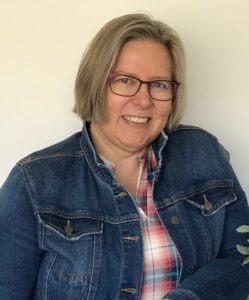
Dr. Ulla Dahlen has her PhD in Counselor Education and Supervision from Regent University, VA, USA (2011). She currently resides in her native country, Finland, where she works as a therapist. Her professional interests include integration of faith and psychological principles as well as helping to develop teaching and training in foundational counseling and human relational skills. She has authored and co-authored counseling books in Finnish, as well as professional articles in English. She enjoys outdoor activities with her husband David and swimming in the local river throughout the year.
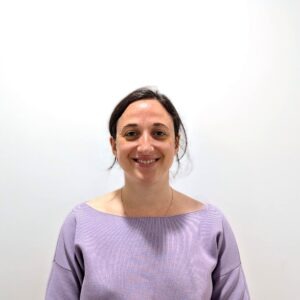
María Dolores Barroso López obtained her degree in Psychology in Barcelona in 2012. She completed her PhD in Humanities and Social Sciences in 2017 and is currently an Associate Professor (PhD) at Universitat Abat Oliba CEU, where she teaches several courses in the Psychology degree program. She combines her academic work with private psychotherapeutic practice as a General Health Psychologist, a role she has held since 2012.
Her professional approach is grounded in an Aristotelian-Thomistic anthropology in dialogue with contemporary psychology, including logotherapy, individual psychology, EMDR, among others. In the field of research, she has participated in several projects focused on the anthropological foundations of psychotherapy, notably “Virtue, Psychology and Mental Health” (2020–2022) and “The Humanization of Mental Health” (2023–present).
In recent years, she has delved deeply into the thought of Magda Arnold, especially regarding the concept of the “self-ideal” and its relevance for understanding emotional life and personality, as well as the use of the TAT in psychotherapeutic assessment. She is currently collaborating with other researchers in this line of study.
Dr Ewa Kiliszek is a psychotherapist, psychotherapy supervisor, psychotraumatologist, EMDR therapist, Balint group leader and supervisor, crisis intervention specialist, mediator, and domestic violence prevention specialist. She works with adults, couples, and families using systemic and psychodynamic approaches.
She holds a PhD in psychology and is an Assistant Professor at the Institute of Social Prevention and Resocialization, University of Warsaw. Her academic and clinical interests include multi-problem families, socially maladjusted youth, and the role of identity in mental health. She is the author of Family in the Face of Threats, Family in the Face of Opportunities (2019) and a member of several leading Polish professional associations in psychology, psychotherapy, psychotraumatology, EMDR therapy, mediation, and Balint work.